Jean Kossaifi

Jean Kossaifi — Group Lead · AI‑Aided Engineering · NVIDIA Research

I build AI methods and systems for scientific discovery and engineering.

My work spans computer vision, machine learning, tensor methods, and neural operators. At NVIDIA Research, I lead the AI-Aided Engineering group, developing methods and open-source systems for simulation, prediction, and design.

Portrait of Jean Kossaifi
AI-Aided Engineering, neural operators, and tensor methods for physical systems

About

Why this work.

I develop AI methods and systems that help engineers and scientists accelerate simulation, prediction, and design. The aim is to preserve the structure of physical problems, their geometry, conditions, and regimes—while making computation fast enough to change how ideas are explored.

Today I lead the AI-Aided Engineering group at NVIDIA Research, where we advance Physics AI across engineering, weather, and materials. Open source is central to that work: I created and lead TensorLy and NeuralOperator, making advanced tensor and operator-learning methods easier to use, extend, and apply.

Before NVIDIA, I was a founding member of the Samsung AI Center in Cambridge. My academic training spans mathematics, computer science, and AI. I earned a French engineering degree (Diplôme d’Ingénieur) in mathematics, computer science and finance, alongside a BSc in Advanced Mathematics. I then earned an MSc in Advanced Computing with Distinction from Imperial College London, followed by a PhD in Artificial Intelligence at Imperial under the supervision of Professor Maja Pantic in the i.bug group.


Signature work

Open, tested code.

ATLAS

Industry impact

Probabilistic medium-range weather forecasting.

I led the development of ATLAS, a transformer that produces large forecast ensembles orders of magnitude faster than traditional numerical weather prediction.

Research agenda

Learning systems grounded in the physical world.

Neural operators

Learning mappings between function spaces so models can transfer across resolutions, geometries, and physical regimes.

Geometry and conditioning

Building architectures that respect irregular domains, boundary conditions, and the structure of engineering problems.

Efficient tensor learning

Using multilinear structure to make large learning systems more compact, expressive, and computationally efficient.

Design under uncertainty

Turning fast learned surrogates into useful tools for optimization, exploration, and real engineering decisions.

Research in practice

From simulation to interactive design.

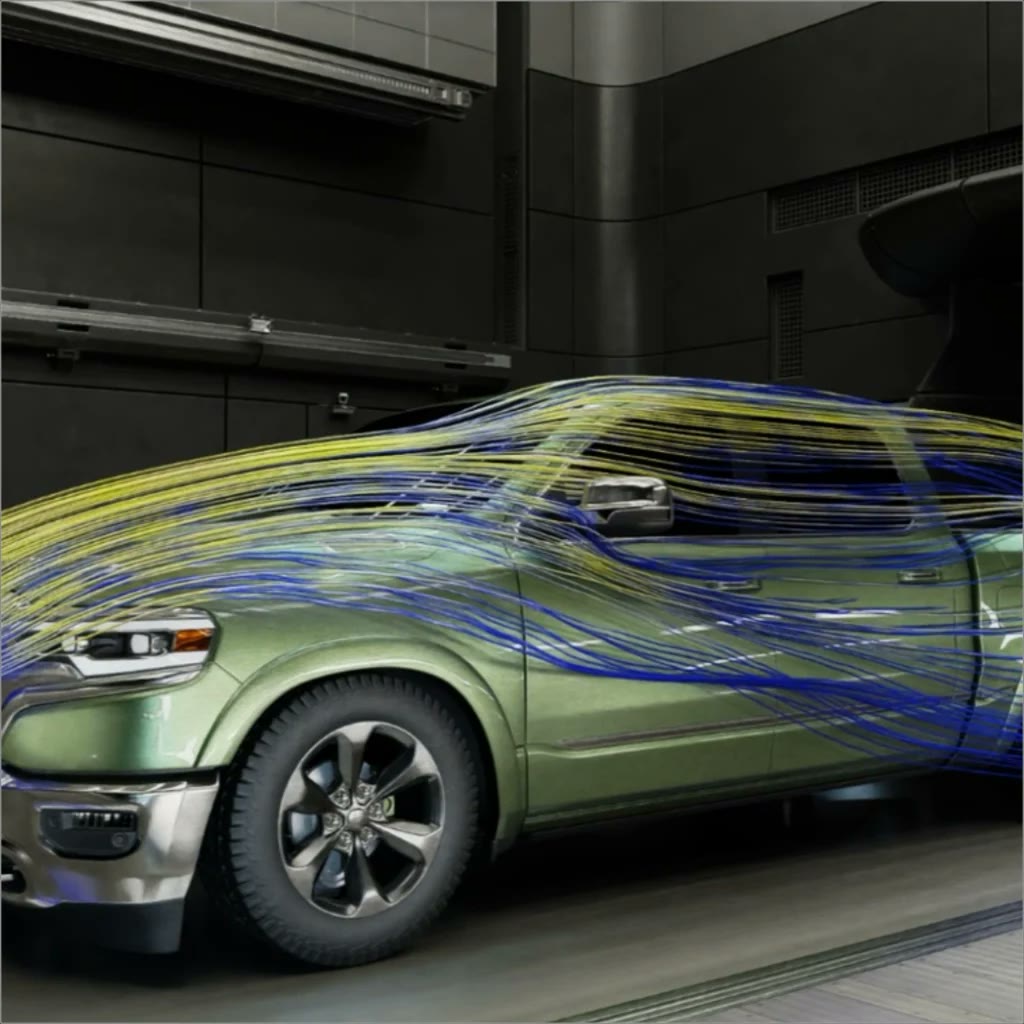
The goal is not a faster benchmark in isolation. It is a model that preserves physical structure, generalizes across design changes, and becomes useful inside the engineering loop.

G maps the input function a to the solution u

Computational fluid dynamics visualization: airflow streamlines over a car body in a wind tunnel
Airflow · geometry · design

Selected publications

Ideas, methods, and systems.

Demystifying Data-Driven Probabilistic Medium-Range Weather Forecasting

Jean Kossaifi, Nikola Kovachki, Morteza Mardani, Daniel Leibovici, Suman Ravuri, Ira Shokar, Edoardo Calvello, Mohammad Shoaib Abbas, Peter Harrington, Ashay Subramaniam, Noah Brenowitz, Boris Bonev, Wonmin Byeon, Karsten Kreis, Dale Durran, Arash Vahdat, Mike Pritchard, Jan Kautz

arXiv:2601.18111

Neural operators for accelerating scientific simulations and design

Kamyar Azizzadenesheli, Nikola Kovachki, Zongyi Li, Miguel Liu-Schiaffini, Jean Kossaifi, Anima Anandkumar

Nature Reviews Physics

A library for learning neural operators

Jean Kossaifi, Nikola Kovachki, Zongyi Li, David Pitt, Miguel Liu-Schiaffini, Robert Joseph George, Boris Bonev, Kamyar Azizzadenesheli, Julius Berner, Valentin Duruisseaux, et al.

arXiv:2412.10354

Updates

Writing, talks, and updates.

Academic leadership & service

Contributing to the institutions behind the research.

Leadership & editorial

Current roles supporting the research community and its institutions.

Peer review & program service

The full service record, grouped by responsibility.
Show the full recordHide the full record

Area Chair

  • NeurIPS 2022–2024
  • ICML 2023–2025
  • ICLR 2023

Reviewer

  • TPAMI 2020–2021
  • JMLR 2017–2022
  • ICCV 2019–2021
  • SciPy 2021
  • NeurIPS 2018, 2020, 2021
  • ICLR 2019–2020
  • ICML 2019
  • CVPR — Outstanding Reviewer 2020 2019–2020
  • AAAI 2020
  • ECCV 2020
  • Transactions on Signal Processing 2021–2022
  • Image and Vision Computing Journal 2014–2018
  • IEEE Transactions on Emerging Topics in Computing 2019
  • IEEE Sensors 2022

Contact

Let’s build the next generation of engineering tools.

For research conversations, open-source collaboration, and speaking enquiries, email is the best place to begin.

Jean Kossaifi — Group Lead · AI‑Aided Engineering · NVIDIA Research